






Bad Bunny Reminds America That Puerto Rico Is Part of the U.S. — Some Republicans Still Haven’t Noticed
A lighthearted comment by Puerto Rican superstar Bad Bunny has reignited a familiar political debate about language and identity in the United States.
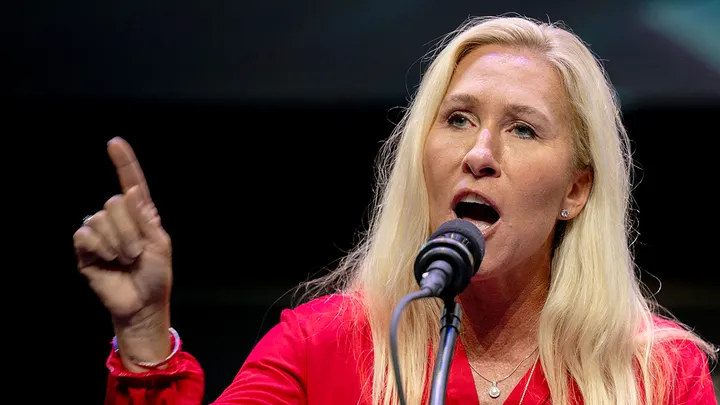
Following the artist’s joke on Saturday Night Live—that Americans have “four months to learn Spanish” before his scheduled Super Bowl halftime performance—Rep. Marjorie Taylor Greene, R-Ga., renewed her call for Congress to make English the official language of the nation.
“Bad Bunny says America has four months to learn Spanish before his perverse, unwanted performance at the Super Bowl halftime,” Greene wrote Monday on X, formerly Twitter. “It would be a good time to pass my bill to make English the official language of America.”
The statement, echoing decades of similar proposals in Washington, comes at a time when the United States remains one of the most linguistically diverse nations in the world. More than 41 million people in the U.S. speak Spanish at home, according to Census data, making it the second most spoken language in the country.
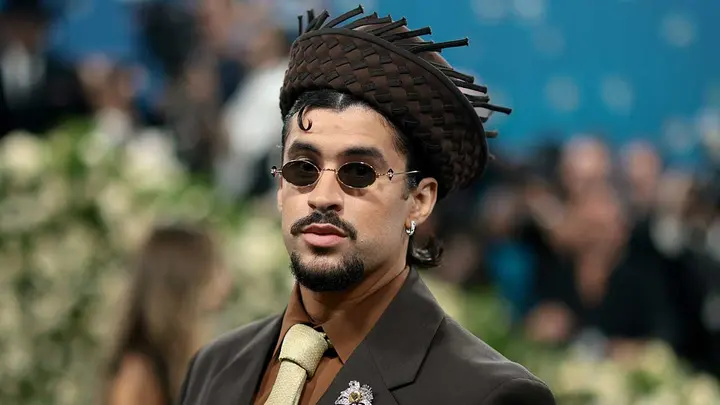
Bad Bunny—whose real name is Benito Antonio Martínez Ocasio—was born and raised in Puerto Rico, a U.S. territory since 1898. Its residents are American citizens, though they cannot vote in presidential elections and lack full voting representation in Congress. Spanish and English are both official languages of the island.
Despite this, public reactions to Bad Bunny’s upcoming Super Bowl appearance have included references to immigration enforcement and criticism of Spanish-language use—underscoring, some observers say, a broader misconception about Puerto Rico’s relationship to the mainland.
“Every time a Puerto Rican public figure speaks Spanish, there’s a portion of the U.S. audience that treats it as foreign or un-American,” said [insert academic or cultural expert name, e.g. Dr. Maria Sanchez, professor of Latin American Studies at the University of Miami]. “But Puerto Rico is part of the United States. Its language and culture are part of the American story.”
The Trump administration recently signed an executive order designating English as the official language at the federal level—a largely symbolic move, since English has long been the de facto language of government. Supporters argue such policies promote unity, while critics say they risk marginalizing millions of U.S. citizens who speak other languages.
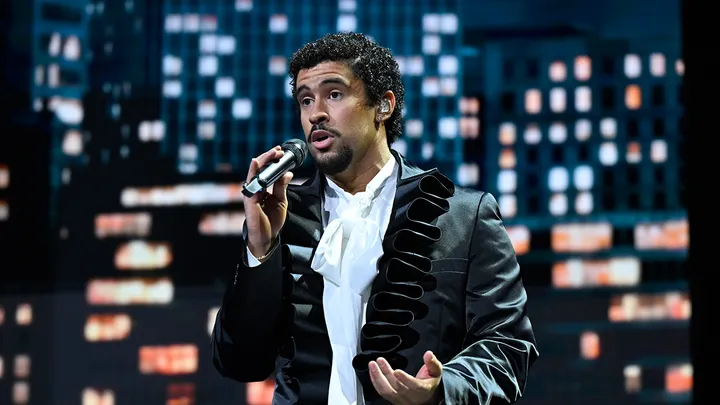
Bad Bunny, one of the world’s most streamed artists, has used his platform to celebrate Puerto Rican identity and often switches between Spanish and English in his music. During his SNL monologue, his comment about learning Spanish was delivered with humor.
“If you didn’t understand what I just said, you have four months to learn,” he joked.
Cultural analysts note that the exchange reflects a growing tension between America’s multilingual reality and political efforts to define national identity through language.
“Language has always been a proxy for belonging,” said [expert]. “But the United States has never been monolingual. From Puerto Rico to the Southwest to immigrant communities nationwide, multilingualism is part of what it means to be American.”
As preparations continue for Super Bowl 60 in Santa Clara, California, the debate highlights a larger question: how a nation built on diversity chooses to define itself—and whose voices are recognized as part of its mainstream culture.